How communities
make decisions
I study what happens to collective decision-making when AI enters the room: how information diversity shifts, whose knowledge gets heard, and what the group loses or gains. My background runs from agricultural science to collective intelligence and computational social science.
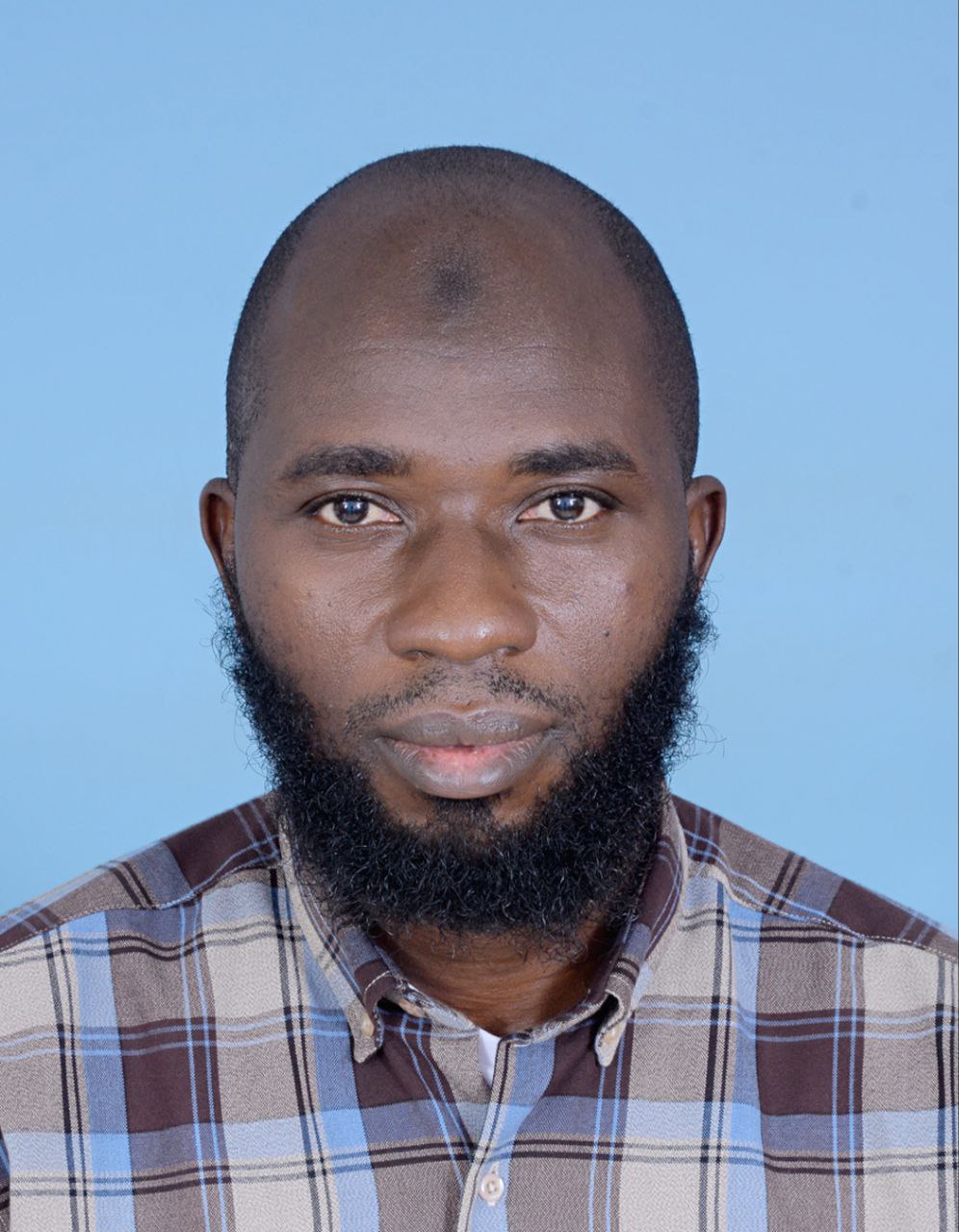
The short version
I research collective intelligence and what happens to group decision-making when AI enters the process. Before this, I earned a Master's in Collective Intelligence from Mohammed VI Polytechnic University in Morocco, where I researched how smallholder farming communities make collective decisions. I grew up in Nigeria and studied agricultural science at LAUTECH.
Three countries, three intellectual traditions. The connecting thread is a recurring question: how do groups of people arrive at good decisions, and how can technology support rather than distort that process?
I work with both qualitative and computational methods: Python, R, agent-based modelling, and data science alongside fieldwork and participatory research.
This stage of the work raises more questions than answers, and that feels right to me. I write about what I'm learning on my blog.
“None of us is as smart as all of us.”
Questions I'm sitting with
These are the threads I'm pulling on. Not finished projects, but the questions shaping my thinking.
Does AI make groups smarter, or just more alike?
My research investigates what happens to group dynamics, information diversity, and collective accuracy when AI systems mediate decision-making. When everyone in a group consults the same AI, individual judgments improve but the group's ability to correct errors can degrade.
What do farmers know that institutions don't?
My master's thesis examined how smallholder farmers in Nigeria perceive cluster farming, connecting agricultural extension systems with collective intelligence methods to surface community knowledge that formal assessments often miss.
Whose knowledge survives when farming goes digital?
Digital advisory tools are reaching farmers that extension services never could, but they tend to centralise advice and treat local observation as noise. I write and think about what gets lost when distributed agricultural knowledge is replaced by uniform recommendation.
Who gets to imagine a country's future?
A co-authored book chapter (forthcoming) on anticipatory governance and innovation systems across African contexts. My interest is the collective-intelligence question underneath it: how distributed and often informal knowledge gets included, or left out, when institutions try to plan for the future.
Featured publication
A Community Knowledge-Based Assessment of Smallholder Farmers' Perception of Cluster Farming
How do smallholder farmers actually perceive cluster farming? This study used community knowledge-based methods to understand farmer attitudes toward collective agricultural models in Nigeria, finding that local perception and institutional assumptions often diverge.
Read on ZenodoWhere I've studied
MSc, Collective Intelligence
Ibn Rochd Excellence Scholarship. Thesis on community knowledge assessment in Nigerian farming communities.
BTech, Crop & Environmental Protection
Foundation in systems thinking, environmental science, and agricultural methodology.
Let's talk
I'm always interested in conversations about collective intelligence, AI and society, or cross-cultural research collaboration.